The basic self-care responsibilities that people carry out every day in order to live securely and independently are commonly referred to as ADLs or activities of daily living. People often refer to important roles such as eating, bathing, dressing, moving around, and using the restroom when enquiring what are ADLs or what is ADL in healthcare. Each activity of daily living has significance for everyday living, protection and wellness, particularly for the elderly and those with disabilities.
Because ADLs have an immediate impact on independence, honor, and quality of life, knowing them is fundamental. A person can need support at home or in a care facility if they suffer with assisted daily living. ADLs support providers determine the right level of care and assess ADL requirements for assisted living to ensure individuals receive help as possible.
Information on ADL assisted living assists everyone involved in care. Patients gain clarity about their abilities and families can make informed care decisions. The caregivers can provide more personalized support and healthcare providers can develop correct care plans. This blog will try to explore what ADLs are in daily living and how assisted living support ADLs in healthcare.
What Does ADLs Stand For?
ADLs stands for Activities of Daily Living which is a healthcare term used to define the routine self-care responsibilities essential for independent living. ADLs help professionals understand how well a person functions in daily life and what level of assisted daily living may be required in healthcare settings. The concept of ADLs originated as a standardized way to assess physical and functional ability. This is now extensively used in hospitals, home care, and ADL assisted living communities lasting support services.
Important Things About ADLs in Healthcare
- ADLs mean Activities of Daily Living, the foundation of daily self-care.
- Used to measure functional ability in what is ADL in healthcare assessments.
- Help determine ADL requirements for assisted living placement.
- Guide personalized care plans and support services.
- Learn about the requirement for assistance in everyday living.
- Learn about the use such as in hospitals, assisted living facilities, and residential care homes.
- Improve safety, independence and quality of life through organized care planning.
The Core Activities of Daily Living
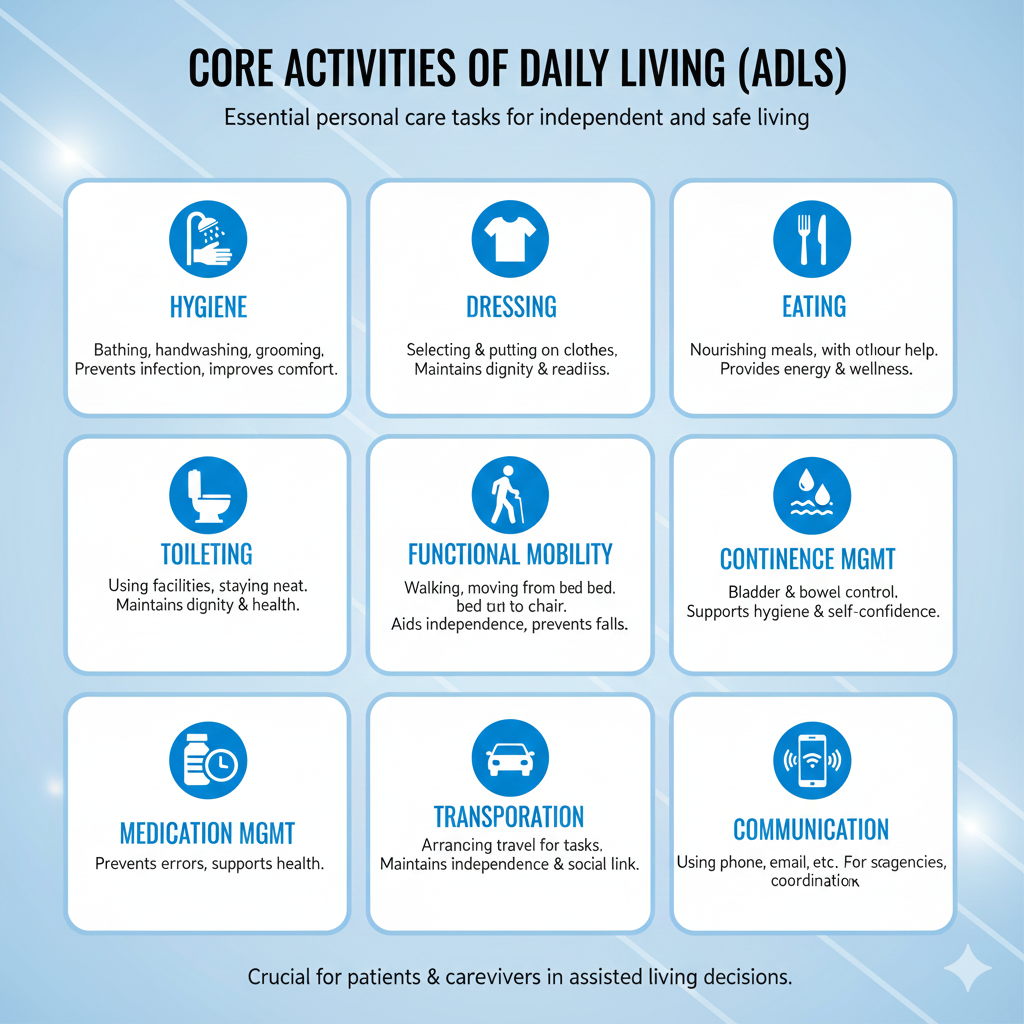
The basic everyday duties constitute vital personal care obligations that let people live safely and on their own. Both patients and carers should be aware of these activities of daily living, especially when considering ADL assisted living or assisted daily living support. The following are the patient based assessment of each ADL:
- Practice excellent hygiene activities to avoid infections and improve comfort through bathing, hand washing, brushing teeth, and maintenance.
- Dress properly to preserve or safe dignity and to be ready for everyday roles or responsibilities.
- Eating nutritious meals carefully, whether your own or with help for energy, nutrition, and general wellness programs.
- Managing bathroom preferences, keeping oneself neat and using toilet facilities for maintaining dignity, comfort, and avoiding health issues.
- Assistive devices are useful for independence and fall prevention, walking, or safely getting from bed to a chair or anywhere.
- The bladder and bowel manage using the tools or assistance needed to maintain hygiene, health, and self-confidence.
- Remember, organize, and take medications correctly to prevent errors and support treatment plans.
- Use or arrange transportation for markets, appointments, or social activities to maintain independence and community engagement.
- Use email, phones, or other devices to stay connected to support social interaction, emergencies, and daily coordination.
- You can learn more about the difference between assisted living and independent living for better ADL living activities.
How ADLs Are Assessed in Healthcare
Assessing ADLs in healthcare is a dynamic step in understanding the ability of a person to live independently and safely. Assessing Activities of Daily Living assists medical professionals identify when ADL assisted living services or assistance with daily living support are required. These assessments ensure that patients receive the correct level of assistance and act as a basis for individualized care planning. Following are important points about ADL assessments:
- Standard tools such as the Barthel Index or Katz Index measure a person’s ability to perform fundamental ADLs.
- Occupational therapists, physical therapists, physicians and Nurses typically perform assessments or conduct ADL evaluations.
- Assessments detect areas where support is required, from minimal help to full assisted daily living.
- Supports spot fall risks, mobility challenges, or hygiene concerns through safety risk identification.
- Guides decisions about ADL requirements for assisted living communities.
- 24/7 safety monitoring changes in ADL ability informs adjustments in care plans.
- Ensures patients receive support while maintaining as much autonomy as possible.
ADLs and Assisted Living: Understanding the Connection
ADLs are fundamental when determining the eligibility of a person for assisted living. A person can benefit from more assistance if he has trouble with basic activities of daily living such as bathing, dressing, or moving everywhere. ADL standards for assisted living are reviewed in order to make sure that residents receive a satisfactory level of care. Family involvement and medical professionals can select the ideal care setting with greater ease when they are informed of these restricting factors.
Staff members at assisted living facilities actively assist residents with ADLs. They provide assistance with daily routines, medication administration, and personal care as desired. Assisted living fosters liberty while providing structured support, in against independent living, when people manage the majority of duties on their own. Skilled nurses can offer additional assistance for people with severe medical issues. Knowing how ADLs affect care allows personalized, compassionate support which improves quality of life.
Who Typically Needs ADL Assistance?
People who face challenges with their everyday activities regularly need personalized ADL assistance. Seniors or older persons can experience reduced energy, strength, or movement difficulties. Support for everyday living activities consequently becomes essential. People with chronic illnesses or personal disabilities frequently require assistance. Patients need temporary help while they heal from surgery or other medical surgical procedures. People with mental illnesses can also require ongoing monitoring. A suitable level of assistance ensures the comfort, safety, and dignity of individuals with everyday living.
Why Early ADL Support Improves Health Outcomes
Early ADL assistance is fundamental in order to preserve independence, safety, and health. Assisting carers and patients with Activities of Daily Living before difficulties intensify reduces the danger of accidents, fosters independence, and improves their general health. Benefits of early ADL support:
- Injuries from falls can be avoided by addressing safety and mobility risk factors.
- Admissions to hospitals can be decreased by offering early intervention and monitoring.
- Maintains independence for longer that enables people to easily carry out regular duties.
- Supports people to manage ongoing medical conditions to ensure appropriate diet and personal hygiene.
- Caregiver exhaustion and anxiety can be reduced by organized assistance.
- Improves general quality of life through offering ongoing consideration, comfort, and dignity.
- Encourages early decline in function detection, which enables prompt treatments and individualized care plans.
When to Seek Help for ADL Support
It is important to know when to seek ADL support for safety and wellbeing. Difficulty managing the bathing, dressing, eating, or moving safely somewhere, everyday falls, or forgetting daily tasks are the warning signs that assistance may be required. Families can start the conversation with empathy for assisted living of their beloved that focuses on safety and quality of life rather than loss of independence. Assessment of Activities of Daily Living can be done by collaborating with healthcare providers. This helps to build a personalized ADL Assistance care plan that may include home care, assisted daily living, or ADL assisted living options.
How Champions Haven Support Activities of Daily Living (ADLs)
Champions Haven is an assisted living service provider which is located in Lancaster, Texas. This focuses to help residents with Activities of Daily Living ADLs in a warm and home-like environment. Caregivers offer individualized assistance for daily living activities such as, bathing, dressing, moving around, and consuming medicines. This fosters freedom, safety, and dignity for persons who require assistance with regular activities. Caring carers are on hand 24/7 safety monitoring to assist residents in doing essential ADLs and keeping up comfort in their daily routines. Their approach balances independence with appropriate support and to help individuals live fulfilling lives within a secure and appealing environment.
FAQs
What are ADLs?
Activities of Daily Living are basic activities that support independent living such as eating, getting dressed, bathing, and moving around.
Does Champions Haven assist with ADLs?
Yes, Champions Haven provides personalized support with all essential ADLs to ensure safety and comfort.
Who benefits from assisted daily living at Champions Haven?
ADL assistance can be useful and helpful for seniors, people with chronic illnesses, disabilities, and who are trying to recover after surgery.
How does Champions Haven maintain resident independence?
Although, encourage residents to perform out activities of their own as often as possible and carers offer support when necessary.
What makes Champions Haven different from other assisted living service providers?
Champions Haven integrates personalized ADL support, compassionate care, and a safe or home environment for residents.