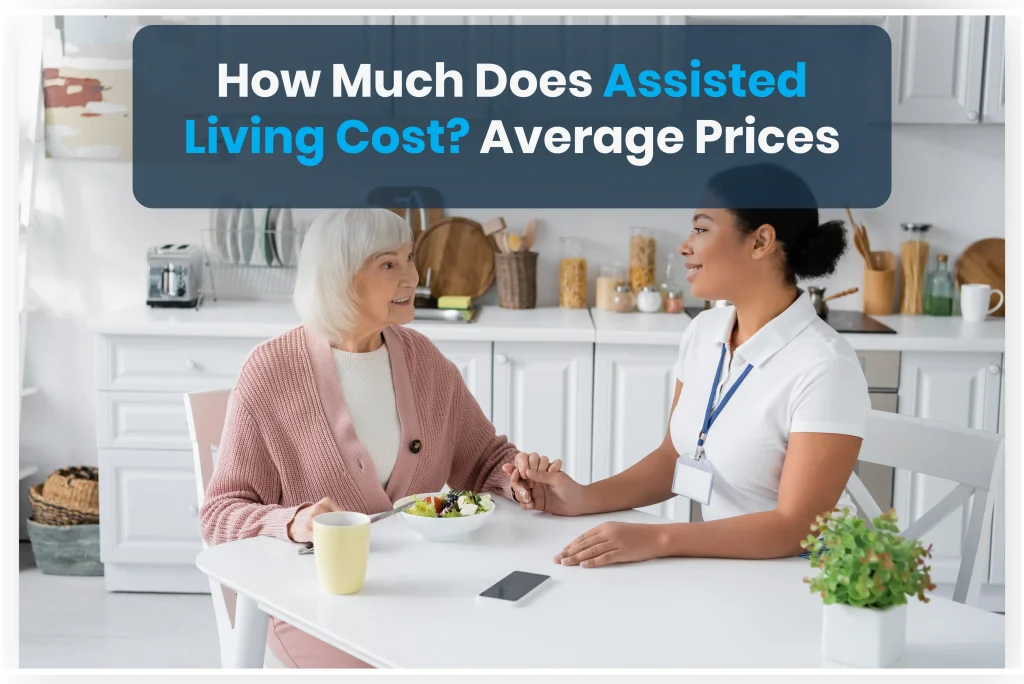
Assisted living facilities are some of the long-term care that is meant to accommodate older individuals who have recognized the importance of their independence yet require some assistance with their daily living activities like bathing, changing, medication, and eating. The assisted living homes are a transition between homes and nursing homes. They propose individual or semi-personal apartments, activities and individualized support.
One of the major concerns of most families in relation to assisted living facilities is cost. Depending on the location, quality of care, and services, this cost can vary considerably between a few thousand dollars a month on the one hand, and significantly more in the areas with high demand. The basic cost is needed to be noted as well as the additional cost and what determines the cost. This blog will explore how much assisted living costs.
What Is Assisted Living?
Assisted living is an accommodation and personal care of older adults in need of daily assistance.
Definition And Key Features
It is worth knowing what is entailed in assisted living first before posing the question, how much does assisted living cost? Assisted living facilities give individual or semi-personal apartments, personal and collective assistance, meals and social amenities. The services are fundamental ones that directly determine the total assisted living price and average assisted living prices across the country.
Assisted Living Vs Nursing Homes
The most important difference when comparing the cost of an assisted living to nursing home is the level of medical care. The 24-hour Nursing skilled nursing in nursing homes increases the costs in the comparison of assisted living facilities. Assisted living is concerned with everyday care and as such assisted living costs are usually cheaper as compared to nursing homes.
Assisted Living Vs Home Care
Assisted living cost is compared by families with the in-home care costs. Home care might appear to be flexible, but the hourly rates can reach significant amounts easily. In most instances, cost of assisted living is competitive as the daily needs rise particularly when meals, accommodation, and supervision are provided. Even when planning budgets, many assisted living services such as nutritious meals, reduce extra food costs and simplify monthly expenses.
Services Typically Included
What is the average cost of assisted living? Base assisted living rates generally encompass lodging, food, housekeeping, utilities, repairs and medicine administration. Assisted living average cost may increase however with new personal care services, upgraded apartments or special services and this influences the extent to which assisted living overall costs.
What is Average Cost of Assisted Living
In the U.S. the average price of assisted living is generally around 4500-6300 per month (approximately 54,000-75,000 yearly) although prices differ widely depending on the source and the year. There is also a substantial regional variation: in high-cost states or urban areas (such as Hawaii, Alaska or large cities), facilities tend to be priced substantially higher than these averages, and in many rural or less expensive states, are lower. Monthly prices could be about 3000-5000 dollars in cheaper locations and 7000 plus in higher cost markets with costs per year varying between around 36000-80000 in different places and services required.
Average Cost of Assisted Living in 2026
The assisted living average cost in the U.S. in 2026 is approximately 6313 per month (approximately 75756 per year) but the costs will be different across location and facility.
Annual Cost Estimate
With monthly charges, average annual assisted living price is close to $75,000-76,000 depending on the services provided and care needed.
Cost Comparison by State
Certain states such as Mississippi and Alabama are on the lower end of the assisted living cost whereas Alaska, Massachusetts and Connecticut have been on the topmost list with considerably high assisted living prices per month.
Cost Urban Vs. Rural Areas
In most cases, prices of assisted living are higher in urban environments than in rural environments due to demand and operational expenses which may be 25-40% higher in urban areas than in small towns or rural settings.
Comparison to In-Home Care
Comparing assisted living and in-home care costs, full-time home care professionals may be sometimes more expensive than monthly assisted living charges based on care hours required.
Comparison to Nursing Homes
Nursing homes tend to be more expensive per month than assisted living particularly in terms of the individual rooms, due to the fact that they have more intense medical and skilled nursing care.
What is Included in the Base Price?
Base assisted living is generally inclusive of lodging, feeding, and everyday needs. Explore and learn more options for meals for elderly parents and choices of healthy prepared meals for seniors.
Housing Options and Costs
The greatest part of assisted living cost is housing. The residents use either a private or shared apartment, with the latter augmenting the price of assisted living. The extent of location, square footage and amenities have a direct impact on the amount of assisted living cost each month.
Meals And Dining Services
The majority of assisted living establishment budgets involve two or three meals a day as well as snacks and dining. These are packaged into the base rate, and they are more useful in estimating what assisted living does minus separate food costs.
Housekeeping And Maintenance
Normal housekeeping, laundry, linen, and basic maintenance are some of the services that are typically included as part of assisted living. These services minimize the extra costs of living and this is included in the average cost of assisted living families.
Utilities And Basic Services
The cost of assisted living usually covers such utilities as electricity, water, heating, trash removal, and even cable. The inclusion of utilities assists in stabilizing the assisted living costs and the monthly budgeting is made easy.
Social Activities and Programs
Assisted living cost usually comprises social events, fitness classes, group outings and recreational programs. Such activities provide wellness and community activities without putting a huge burden on the assisted living residents. Residents also benefit from wellness programs as part of the assisted living services, which help them with physical and mental health through exercise, fitness classes, and wellness plans.
Basic Assistance with ADLs
Base pricing may be reduced assistance such as bathing, dressing, and medication reminders, all activities of daily living (ADLs). Nevertheless, additional care can increase the price of assisted living facilities to an amount higher than the usual monthly fees.
Common Additional Fees
Extra services might add up to over the total cost of assisted living than the base monthly fee.
Level of Care Fees
Level-of-care charges are imposed where the residents require more practical support with their everyday chores. Such tiered charges have great influence on assisted living cost and are one of the main factors that determine the difference in the assisted living price among residents.
Medication Management Fees
Though simple reminders can be provided, full drug coverage can be an additional cost. This service has the potential of increasing the total costs of assisted living, in particular, the expenses of those who have to be provided with a number of prescriptions or constant health observation.
Memory Care Add-Ons
Dementia or Alzheimer special memory care usually raises the cost of assisted living facilities. Concrete programs, improved staffing and safe units can significantly increase the average assisted living expenses as compared to standard care.
Laundry Service Fees
Certain communities have basic laundry, and individual laundry services are optional. These recurring minimal fees may slowly add up to the overall cost of assisted living exceeding the stated base cost.
Transportation Services Fees
Planned local transportation can also be part of it, yet longer journeys, medical visits, or individual transportation can be a significant added expense to assisted living. The charges are cumulative on the number of miles, frequency, and degree of support.
Pet Fees and Policies
There are communities that have pets, and in this case, the monthly rental of pets or one-time deposit could be paid. Such charges add a bit to the cost of assisted living and need to be taken into account when determining the overall cost of assisted living.
Community or Entrance Fees
Other places may impose a community or entrance fee when one moves in. This initial expense may have a lot of impact on the cost of living in assisted living in the first year.
Security Deposit Requirements
An apartment is frequently booked on the basis of security deposit, which is intended to compensate for the possible damages. Although it is refundable at times, this initial fee hikes the original assisted living price that families have to plan on.
Factors That Affect Assisted Living Costs
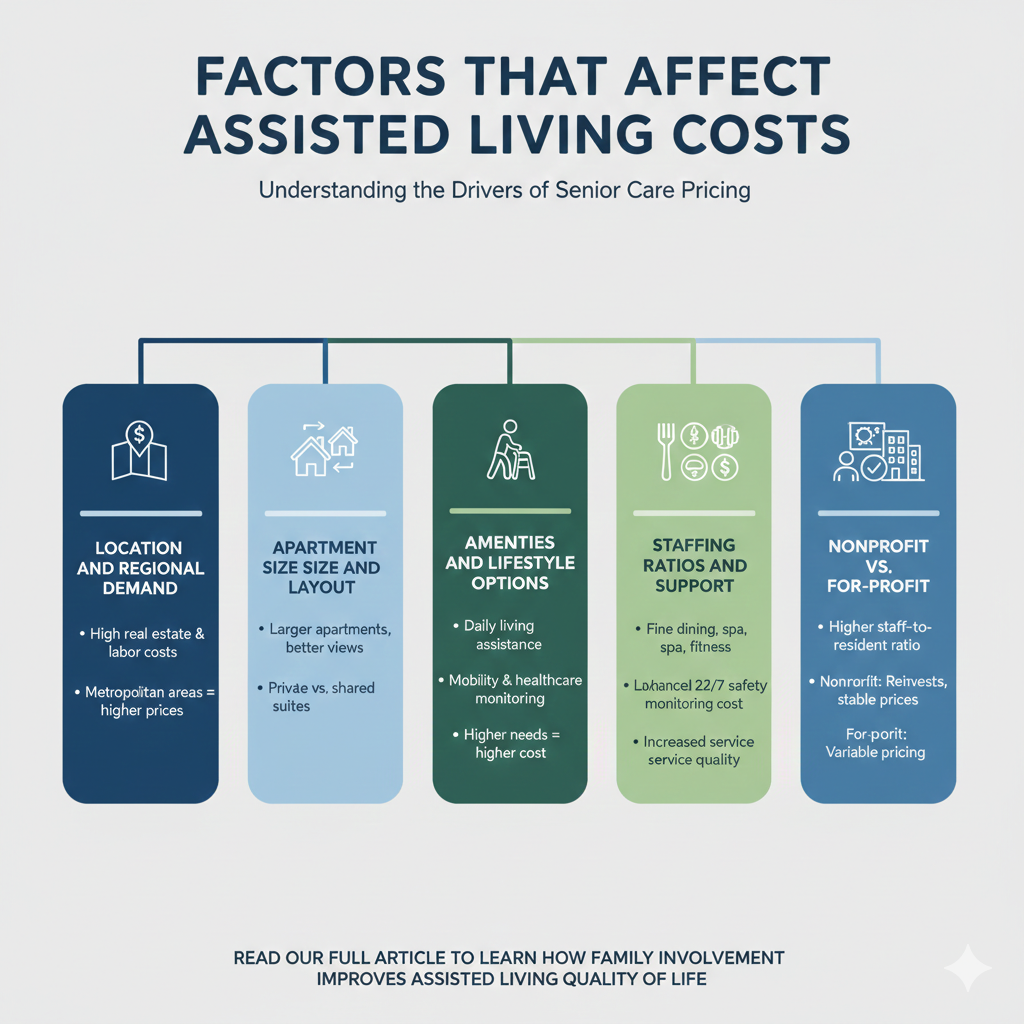
There are a number of primary factors, which have a direct impact on the assisted living overall cost and pricing variance. Learn how family involvement improves assisted living quality of life and supports daily care by reading our full article.
Location And Regional Demand
Assisted living prices are highly influenced by the geographic location. The high real estate, labor, and demand prices normally come at high costs in high-cost states and metropolitan regions, which add up to the overall cost of assisted living.
Apartment Size and Layout
Expansive apartments, superior views, and enhanced plans increase the assisted living expenses. On average, a private one-bedroom is slightly higher than a shared suite, and it has a direct effect on the question of how much assisted living costs per month.
Level of Care Needs
Assisted living is highly costly due to the increased care needs. Patients who require daily practical assistance, mobility, or healthcare monitoring tend to pay higher prices in comparison with individuals who barely require assistance in their activities.
Amenities and Lifestyle Options
Coupled with luxury facilities like fine food, spas, concierge services and fitness centers boost the cost of assisted living facilities. Normal communities provide basic services at lower levels of assisted living average costs.
Staffing Ratios and Support
Societies that have larger staff to resident ratio can charge more since labor costs are high. It is possible to increase the quality of the services with enhanced staffing, but the overall assisted living costs would increase. Advanced 24/7 safety monitoring may slightly increase assisted living costs but ensures continuous resident protection and rapid emergency response.
Nonprofit Versus For-Profit Communities
The nonprofit communities occasionally reinvest the revenue into the services and facilities, which might stabilize the assisted living prices. Profit-oriented facilities can adjust pricing systems, with implications on what is assisted living cost by business model.
How Assisted Living Pricing Structures Work
Assisted living costs models on how all expenses are computed on a monthly basis.
All-Inclusive Pricing Model
The model is a combined cost of housing, meals, utilities, and a majority of the services in the form of a single flat monthly assisted living cost. It also makes it easier to budget and understand assisted living costs, but base rates might seem higher in the short run.
Tiered Pricing Model
Tiered pricing is a price adjustment that adjusts the assisted living price depending on the care determined. The higher the care is required, the higher the payment made by the residents. This model maintains base assisted living rates down but may increase expenses in the future.
Fee-For-Service Model
With this model, the residents will pay a minimum rental, and an additional fee on individual services consumed. Although assisted living initial costs can be less than those in other facilities, add-on services can raise monthly costs by a significant amount.
Pros and Cons of Each
All-inclusive models are predictable and less flexible. Tiered pricing is the matching of cost to the assisted living with the needs of the care. Fee-for-service permits customization at the expense of making assisted living facilities more difficult to estimate precisely.
How to Pay for Assisted Living
The cost of assisted living can be covered in a number of ways depending on resources. Check our guide on how to talk to parents about assisted living for tips on starting the conversation with seniors.
Private Pay Options
The most popular way of paying the assisted living cost is out of pocket. It provides flexibility of choice of facilities and services but solely depends on the personal savings or retirement funds.
Long-Term Care Insurance
Assisted living costs can be subsidized by long-term care insurance, which helps to pay a portion of the monthly expenses. The coverage is dependent on policy, level of care, and location hence enabling families to control the common assisted living expenses better.
Veterans Benefits Assistance
VA benefits can be used to subsidize assisted living by eligible veterans and spouses. Such programs as Aid and Attendance offer monthly allowances, which reduces considerably the cost of assisted living of eligible veterans.
Medicaid (State-Based Rules)
In some states, Medicaid may pay assisted living costs, although there are different eligibility requirements. The programs of a certain state can restrict covered services, and it is necessary to know the cost of assisted living facilities throughout the state under the Medicaid program.
Bridge Loans and Financing
Assisted living expenses can be bridged temporarily using bridge loans or home equity loans. They offer short term money as long term assets are sold or liquidated, such as a house.
Selling A Home
Money from the sale of a home is also commonly used to finance assisted living. This approach has the potential of covering a large part of assisted living average cost and aid to finance long-term care costs.
Life Insurance Conversions
Life insurance conversion or borrowing against cash value to meet assisted living cost are some of the policies that are permissible. Such a plan can be used to complement savings and lower out-of-pocket costs of residents.
Cost-Saving Tips
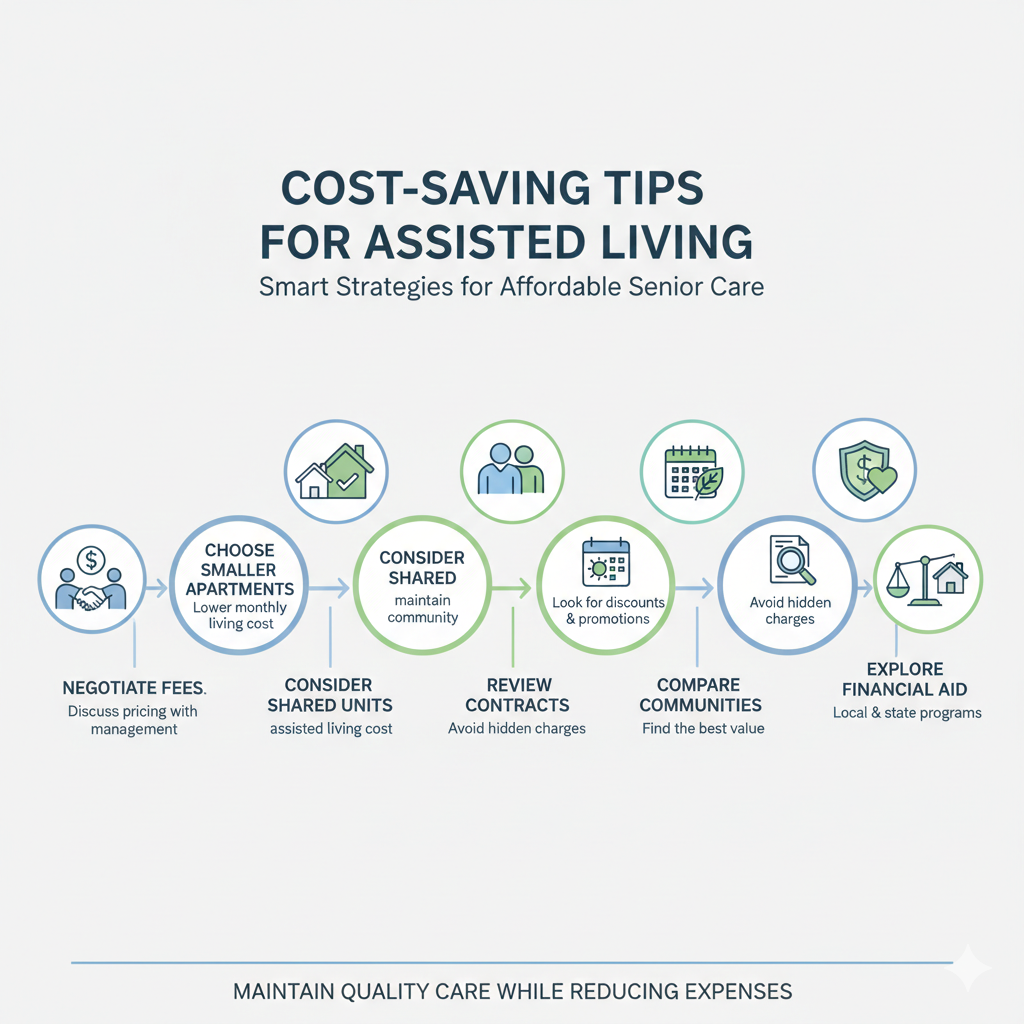
One can implement smart strategies that would allow decreasing the overall cost of assisted living without compromising the necessary services and care.
- Before signing contracts, negotiate with the management on fees that will probably reduce the prices of assisted living.
- Smaller apartments will help in saving a lot of money monthly assisted living cost as opposed to bigger apartments.
- Shared units minimize the costs and yet get the required help and help of the community.
- Relocate in off-peak seasons when assisted living may have discounts or even promotional rates charged.
- Check the review contract with a keen eye in order to avoid some hidden charges that may make assisted living cost even more expensive.
- Make comparisons of various communities to get the best value of similar services and amenities.
- Evaluate the programs of the local or state financial assistance to cover the usual costs of assisted living.
How Champions Haven Support with Assisted Living
Champions Haven Assisted Living helps families in assisted living situations through offering compassionate and healthcare to their clients by offering a balance between independence and daily support needs. They assist residents with their daily living tasks such as bathing, dressing, medication, and healthy diets in a safe home like setting. Champions Haven promotes community, dignity, and peace of mind both to residents and their families and gives the transition into assisted living a smoother and more supportive process through 24/7 monitoring and engaging social and wellness programs.
FAQs
How much does assisted living cost?
Assisted living facilities are dependent on location, level of care and amenities, which are usually between $4,500 and 6,300 a month.
What services are included in the base price?
The majority of base prices include housing, meals, housekeeping, utilities, social activities, and simple help with ADLs.
Are there extra fees beyond the base rate?
Yes – special needs such as memory care, medication management, transporting, pets, and special care are usually costly.
Can insurance or benefits help pay for assisted living?
Assisted living costs can be covered by long-term care insurance, veterans’ benefits, Medicaid, and personal funds.
How can families reduce assisted living costs?
It can be negotiated by paying less, renting smaller or shared rooms, relocating out of peak, and overhauling the contracts.