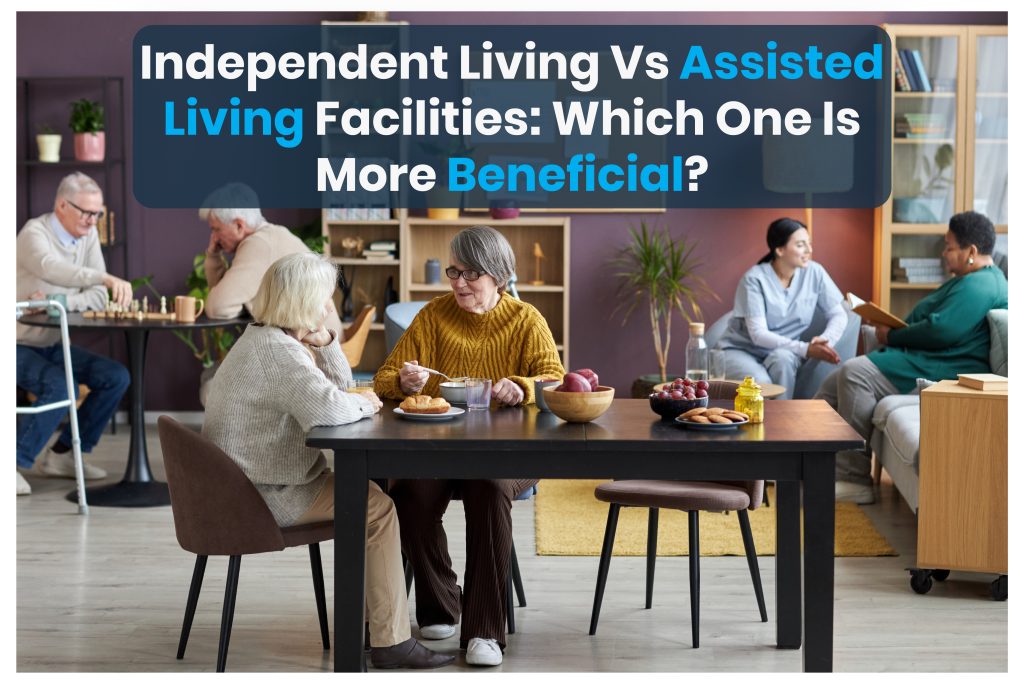
The most significant decisions for older adults and their families are choosing the exact senior living community. Making an informed decision requires knowing the differences between independent living and assisted living given that there are various options available. Although they handle different levels of personal autonomy and care requirements. In order to promote seniors’ and families’ well-being in all aspects of their lives, it is essential that they understand the difference between assisted and independent living. This article will try to explore the difference between independent living and assisted facilities for seniors and which is beneficial for them.
An overview of Independent Living
Independent living is a facility or community where seniors live confidently, actively, and enjoy a lifestyle free of worry and without the burdens of home maintenance. An environment where elders can focus on health, leisure activities, and friendships instead of regular duties or housework. Communities for independent living promote social interaction and independence in a secure and flexible approach to life.
Independent living is suitable and beneficial in the following way:
- Suitable for seniors who want security, accessibility, and social connection without everyday help; ideal for active, independent seniors who want a stress-free, socially conscious lifestyle.
- Provides wellness initiatives, eating alternatives, housekeeping, and effortless maintenance apartments.
- Promotes mental health, independence from household duties, and active aging.
- Promotes a secure, social, and independent setting with assistance at all times available if required.
- Facilitates an effortless transition to assisted living or greater levels of care in the future.
A Brief Overview of Assisted Living
Assisted living is a facility or center and a helpful housing option for seniors who choose independence but want assistance with their everyday burdens such as eating, dressing, showering, taking medications, and preparing meals. The objective of assisted living is to boost the quality of life in safe and caring assistance in an environment that is equivalent to home.
- Suits people who do not require regular medical treatment but suffer from minor medical problems.
- The living facility delivers residents and their families safety, security, and peace of mind.
- Contributes to security and dignity through offering a balance between independence and support.
- Offers daily nutritious food, transport, housekeeping, and personalized treatment plans.
- Bring together and engage in recreational activities, social events, and health programs that will boost quality of life.
- Boost independence by protecting individual freedom and giving support only when required.
- Allows residents to grow older in place safely by responding to changing their medical requirements.
Key Differences Between Independent and Assisted Living
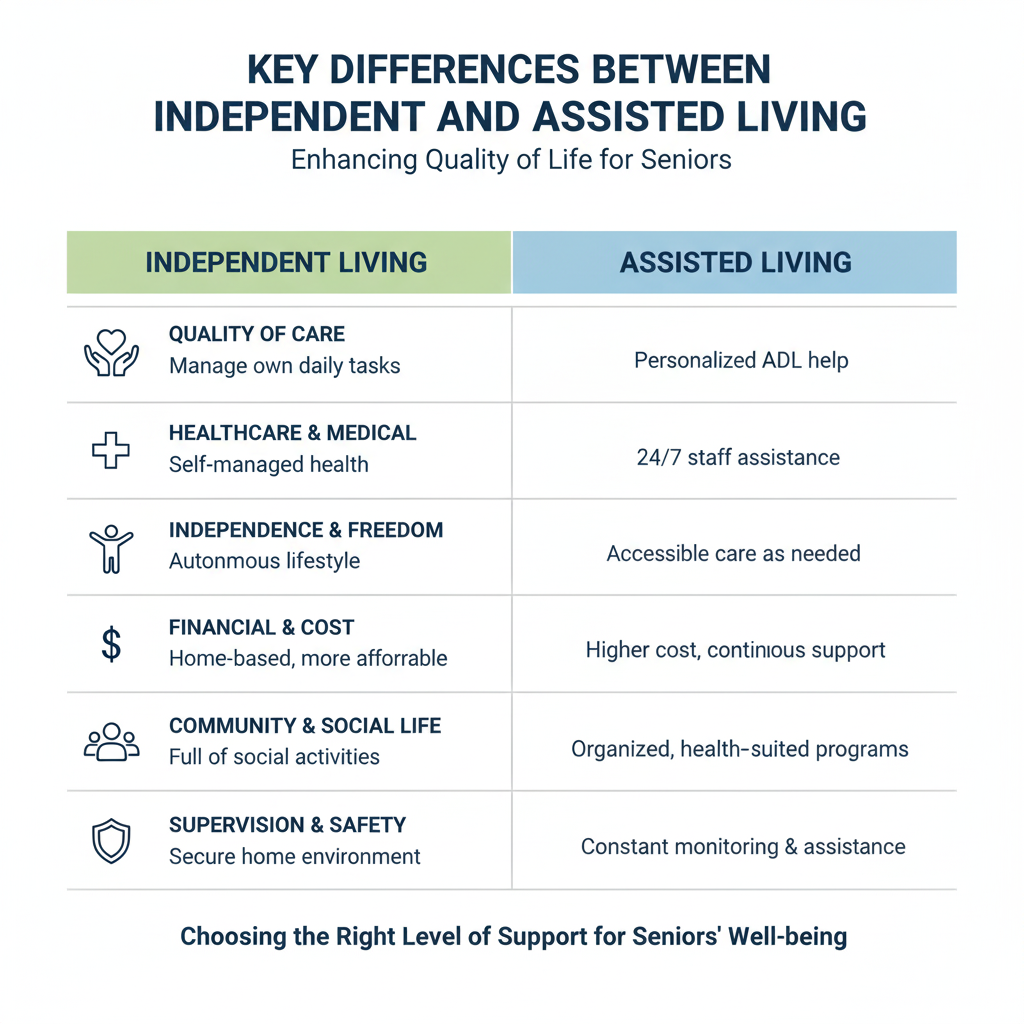
Although the purpose of both independent and assisted living communities is to enhance the quality of life of the seniors. The difference between independent living and assisted living mainly revolves around the level of care and assistance provided.
Here is the following difference of Independent Living and Assisted Living for Seniors:
- Quality of Care and Support – Although assisted living offers personalized help with ADL management while independent living enables seniors to manage their own everyday tasks.
- Healthcare and Medical services – Independent living enables residents to handle the care of their own health, whereas assisted living requires 24/7 assistance from staff.
- Independence and Freedom – Independent living encourages an autonomous lifestyle but assisted living requires accessible care whenever required.
- Financial and Cost Considerations – Independent living is homebased and more affordable while assisted living is of higher cost due to continuous personal support.
- Community Life and Social Activities – Independent living lifestyle is full with social activities whereas assisted living is an organized program suitable to seniors’ overall health.
- Supervision and Safety – Independent living provides a secure home environment whereas assisted living focuses on constant monitoring and immediate assistance.
Read More: What is Assisted Living? A Complete Guide for Families
How to Select the Best Option for You or Your Special one
The choice between assisted living and independent living is decidedly personal and relies on your everyday assistance requirements, routine, and health. The most beneficial decision is to achieve a balance among independence, health, protection, and assistance.
The following are essential considerations when making decision on your lifestyle choices:
- Assess Personal Needs and Health Conditions – You need to evaluate mobility, health, and level of daily assistance needed whether you manage your tasks independently or require help with ADL management.
- Evaluate Lifestyle Preferences – Decide whether you engage your own in community life or require a balanced routine with supportive care.
- Review Budget and Financial Planning – Compare overall costs whether you prefer your homebased affordable services but excludes care services or need ongoing regular support.
- Consider Location and Family Involvement – Select a location close to your loved ones for easy visits and involve family in making decisions.
- Compare Communities through Visit – Take more visits to various facilities to assess environment, management, safety measures, staffing, and transition flexibility.
Transitioning to Senior Living, Planning and Preparation
Transferring to an assisted or independent senior living community is an enormous life shift that can both be exciting as well as mentally challenging. A new chapter packed with opportunities for social interaction, a decreased workload, and a renewed feeling of purpose can often be seen by this stage of life.
The following suggestions needs to be taken into consideration while making plans, getting ready, and changing to senior living:
- Prepare Emotionally for the Change – Recognize the move and focus on new friends, comfort, and fewer tasks, and families can offer reassurance.
- Plan and Organize Early – Begin preparations months ahead to lessen stress, make a checklist and keep meaningful items that bring comfort and understanding.
- Involve Family and Loved Ones – Involve family in the moving process, emotional adjustment, maintain their frequent visits and communication for confidence.
- Stay Positive and Know the Community – Take time to adjust and engage yourself in joint social activities or events to build connections with residents or staff and learn about available programs or resources for new residents.
- Make a Routine – Plan and execute everyday activities that reflect personal interests and comfort to promote stability and emotional well-being.
Explore The Option of Assisted Living Facility at Champions Haven
We believe that the medical needs, and desired level of support play a role in choosing between independent and assisted living for an individual. We offer the best environment and foster independence with personalized assistance care. Our aim at Champions Haven is to encourage residents to live with confidence, respect, integrity, and peace of mind. We provide residents interesting and exciting things to do, kind staff members, and a comfortable safe environment to make them feel completely at home.
Frequently Asked Questions
Q. What age is best for moving into independent living?
Usually between ages 55–75, when seniors pursue a maintenance-free and social lifestyle.
Q. How do I know if I need assisted living instead of independent living?
If everyday tasks or medication management become hard then assisted living is the better option.
Q. Can I switch from independent to assisted living later?
Yes, many communities offer unified transitions within the same campus.
Q. What services are included in assisted living?
These are personal care, medication support, meals, housekeeping, transportation, and 24/7 care.
Q. Do I lose my independence in assisted living?
Champions Haven prioritizes safety first through trained staff on reserve all the time, safe buildings, emergency reply procedures, and regular comfort assessments. Families are encouraged to visit or take part in community events, and they are given regular updates.